Co-Creating Sand Futures at the Stockholm Resilience Centre
By now, we’re all uncomfortably aware that we’re navigating a time of climate and ecological crisis, but it’s less known that back in 2019 the United Nations warned of a simultaneous and intensifying sand crisis. The most recent UN Environment Programme report on the subject announced that global sand consumption has now surged to 50 billion tonnes per year - a five-fold increase since 1970. Sand is now the second-most exploited natural resource on Earth after water. This intensifying use of sand, particularly in and for construction - used in creating all manner of familiar construction materials from concrete to glass and plasters, and its extraction, is now disrupting global sand cycles: accelerating the erosion of coastlines and the erasure of landscapes, fuelling the devastation of living ecosystems and dispossession in the process.
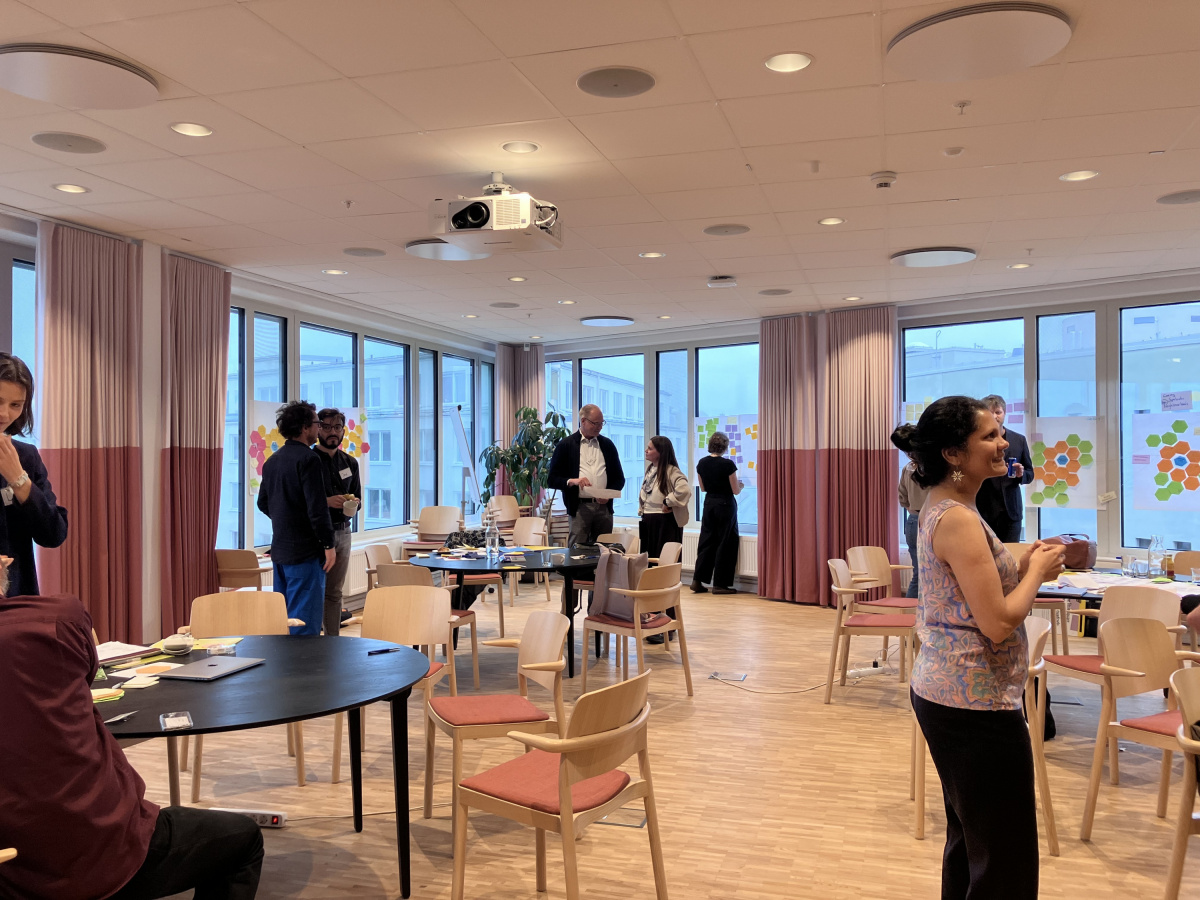
Having overlapped whilst he stewarded the internationally-renowned Anthropocene Architecture School, Architecture Fringe team member Scott was invited by PhD researcher and author of Sand Stories Kiran Pereira to participate in a Sand Futures Co-creation and Visioning Workshop in mid-May. The daylong session was part of Kiran’s ongoing research project at the Stockholm Resilience Centre - the world-leading sustainability and resilience science institute. The workshop drew on each participants’ expansive areas of expertise around regenerative materials and beyond, and was purposefully designed to co-envision transformative possibilities, actions, and pathways that could orient us towards futures of sand sufficiency.
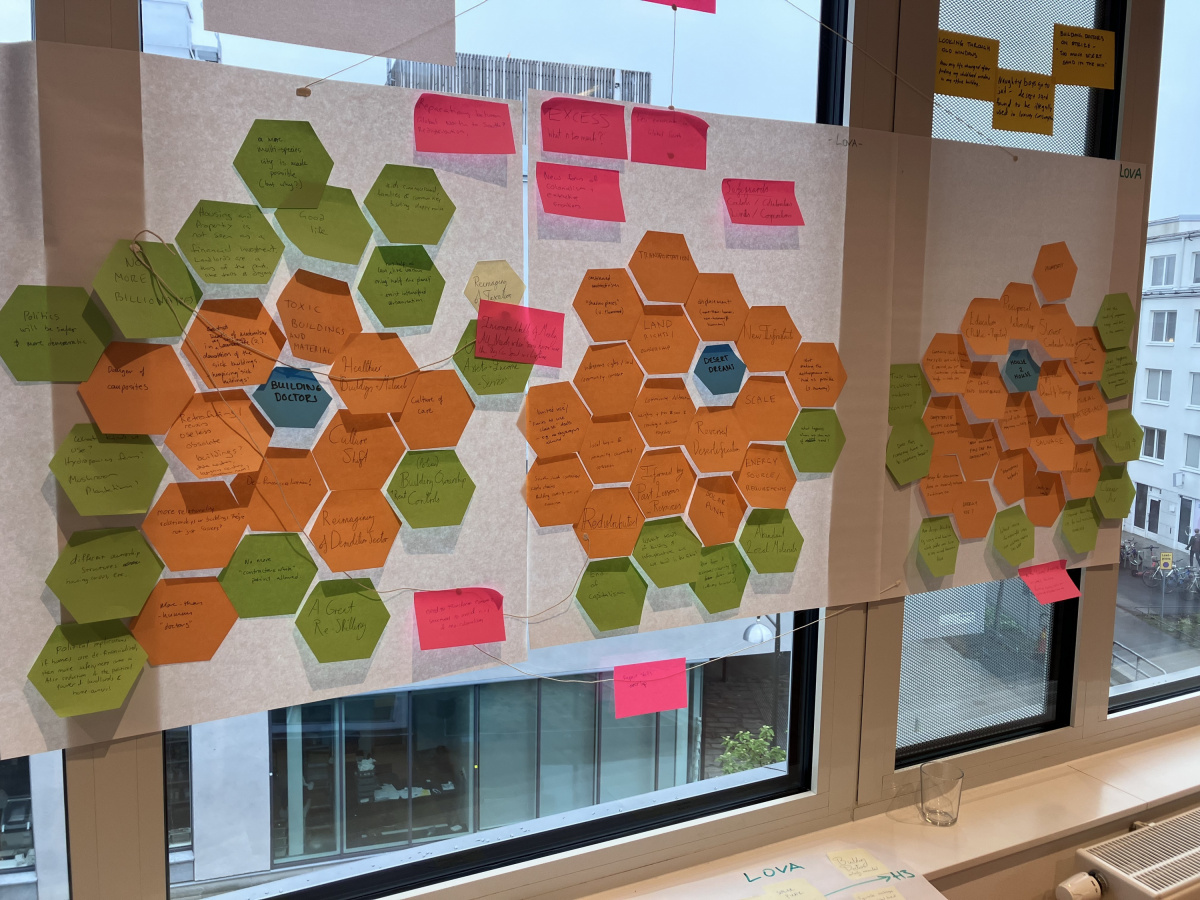
After a warm welcome from Kiran and their co-hosting team, participants from across Europe and beyond were split into groups with a dedicated facilitator and note taker whilst a graphic artist captured visual notes. Over the course of the day, the workshop drew on and synthesised the outputs of a variety of methodologies on speculative futuring, including Seeds of Good Anthropocenes - with each group being assigned three emerging ‘seeds’ to explore their associated consequences, interactions, potential feedback loops and impacts in the future, the Three Horizons Framework - plotting possible step-changes and triggers for regenerative change against today’s norms, Headlines from the Future - a playful exercise that will be familiar to those who’ve been involved with Transition Towns, and a conclusive storytelling exercise.
Scott’s group were dealt three synergistic ‘seeds’ to unpack. Desert Dreams - discussing and imagining the consequences and impacts that emerging technologies that could render desert sand capable of being used in construction could have, House-to-House - the embrace of completely circular construction that retains building components at their highest value, and Building Doctors - an emerging technology that can heal concrete, that the group instead interpreted as a new kind of built environment workers. Other groups were dealt a variety of other economic, policy, sociological, and technological possibilities, and all were kept on track by a team of skilled facilitators..
The workshop was a masterclass in creatively drawing on the diverse backgrounds and expertise of participants in an academic study - from engineers specialising in creating construction materials from straw and architectural workers with specialities in reusing building materials to policy researchers exploring industrial decarbonisation - to collectively explore possible futures; engaging with a subject matter of as seismic significance to global sustainability as Sand Sufficiency, in a way that felt hopeful and often downright joyful.
You can learn more about the sand crisis by listening to Kiran’s conversation on the Building Sustainability Podcast, by reading Sand Stories, exploring the resources signposted on Kiran’s website or by watching the 2013 film Sand Wars.
Scott McAulay, Cross-Sectoral Co-Producer with the Architecture Fringe
Images above by Scott McAulay