Summer Assembly: Earth Station - A School for Learning Otherwise
Summer Assembly: Earth Station - A School for Learning Otherwise
By the Architecture Fringe
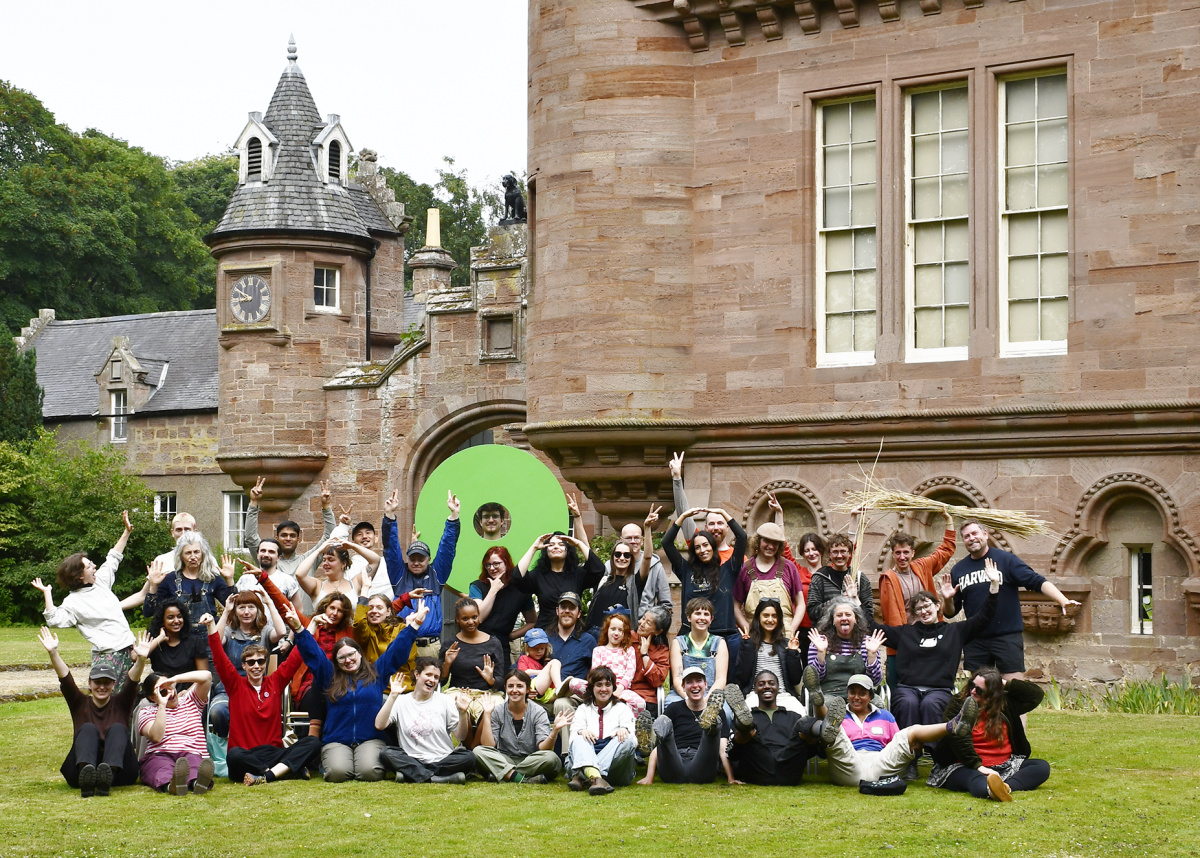
Under the long but not so warm summer sun on Scotland’s east coast, looking out towards the broad blue band of the North Sea at Hospitalfield in Arbroath, 40 practitioners gathered to explore another kind of architectural education. Rather than beginning with the building as its primary object, Summer Assembly: Earth Station began with the things that make architecture possible: material, movement, making and maintenance with a little hint of myth thrown in.
Across five days, artists, architects, makers and designers learned by getting their hands dirty, listening to the weather, following the life of a material, and performing through the landscape in self-made costumes. Questioning and sharing, participants asked how architecture might respond more generously to a world in profound transformation.
Organised and curated by the Architecture Fringe and supported by Creative Scotland Multi-Year Funding, four groups led by architect Marf Summers, artist/builder Becky Little of Rebearth, artists Sophie Dyer and Alison Scott, and architectural consultant Akiko Kobayashi with carpenter Ben Williams, hunkered down across the Hospitalfield site.
Central to the ethos of Earth Station was the positioning of collective learning as a form of practice in itself, exploring what might become possible when the more rigid siloing of our professionalised disciplines are made fuzzy and porous, with less formalised instruction and more collaborative assembly between ‘teacher’ and ‘student’.
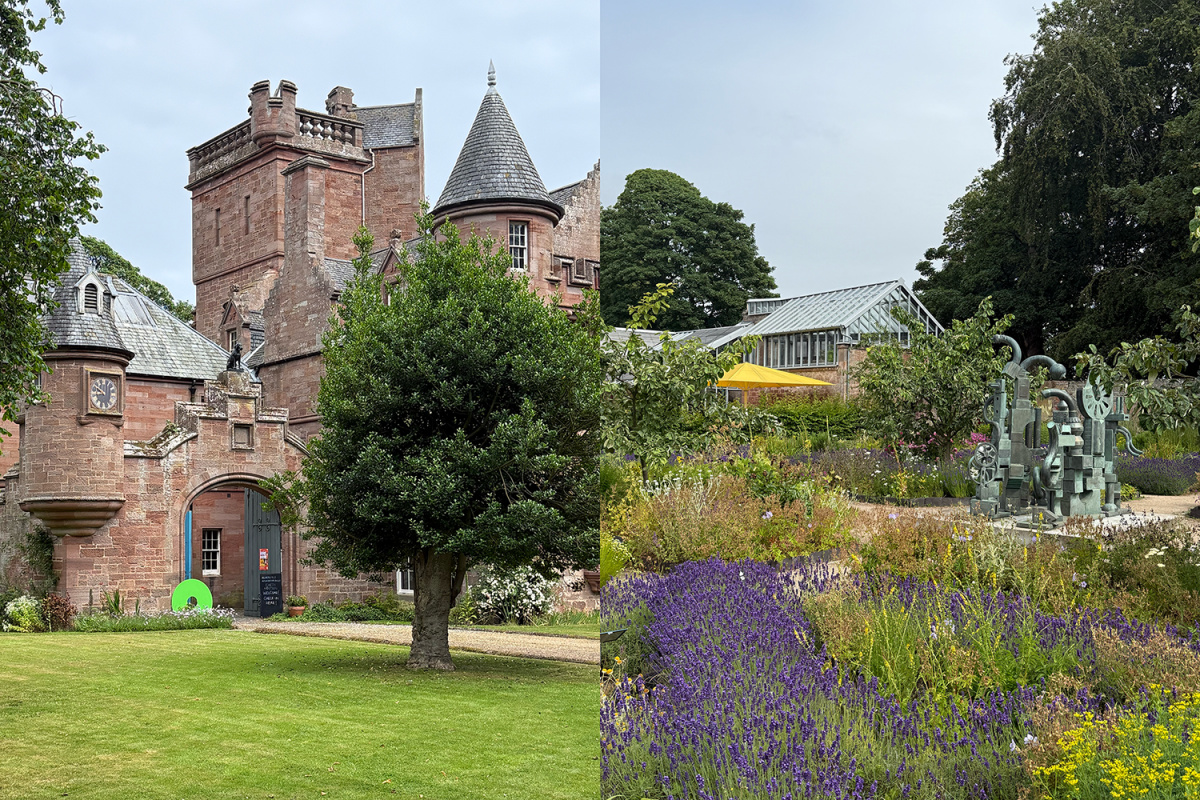
With intergenerational learning an ongoing concern for the Architecture Fringe, Hospitalfield provided an unusually fitting setting. The historic house and contemporary arts centre sits within a landscape that has long connected culture, agriculture, making and exchange. First established in the 14th Century as a medieval hospital then monastery, Hospitalfield opened as an art school in the early 20th Century at the bequest of artist Patrick Allan Fraser and Elizabeth Fraser.
In its contemporary form, Hospitalfield is an internationally renowned centre dedicated to contemporary art and ideas as a place to work, study, and learn. With stunning stately interiors, a Victorian fernery, new studios and cafe designed by architects Caruso St John and all set aside the beautiful walled garden designed by the late horticulturalist Nigel Dunnett, the siting of the summer assembly drew upon this inspiring context to furnish learning and new perspectives, with the site as the very classroom itself.
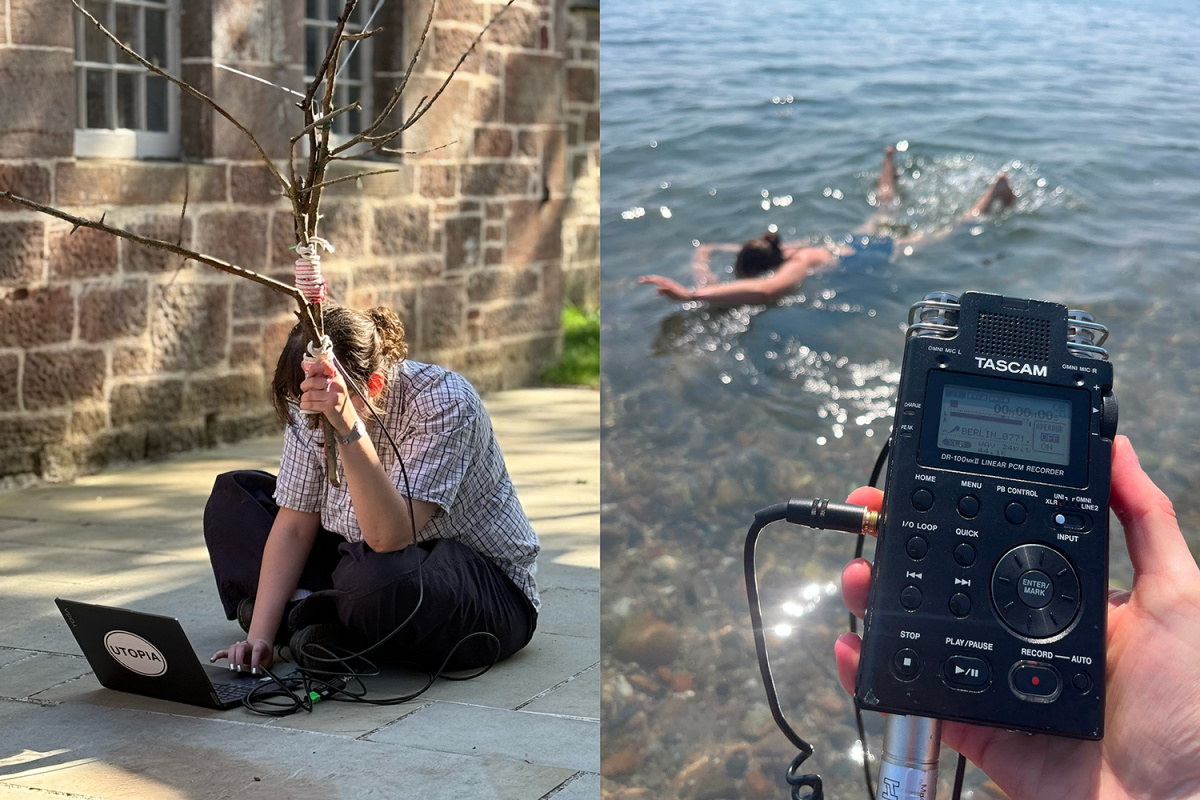
For Insurgent Meteorologies, Soph Dyer and Alison Scott approached weather not simply as a physical phenomenon but as a cultural, political and technological system. Working with radio and sound technologies, participants experimented with expanded forms of weather forecasting, drawing connections between the climate crisis, satellite infrastructure and alternative structures of communication. The project was as much about listening as broadcasting: tuning into local frequencies via self-constructed v-diploe antennas and learning to understand weather as something situated, contested and shared.
A site visit to the archive of the Dundee Satellite Receiving Station at the University of Dundee was a highlight of the week, with the group examining broadcasts and imagery from satellites that passed over the centre for over forty years before its closure in 2019. A field recording workshop on the shoreline was also undertaken with the Dundee Radio Club, and outputs for the week were broadcast simultaneously by the radio club and experimental electromagnetic outfit Wave Farm in upstate New York.
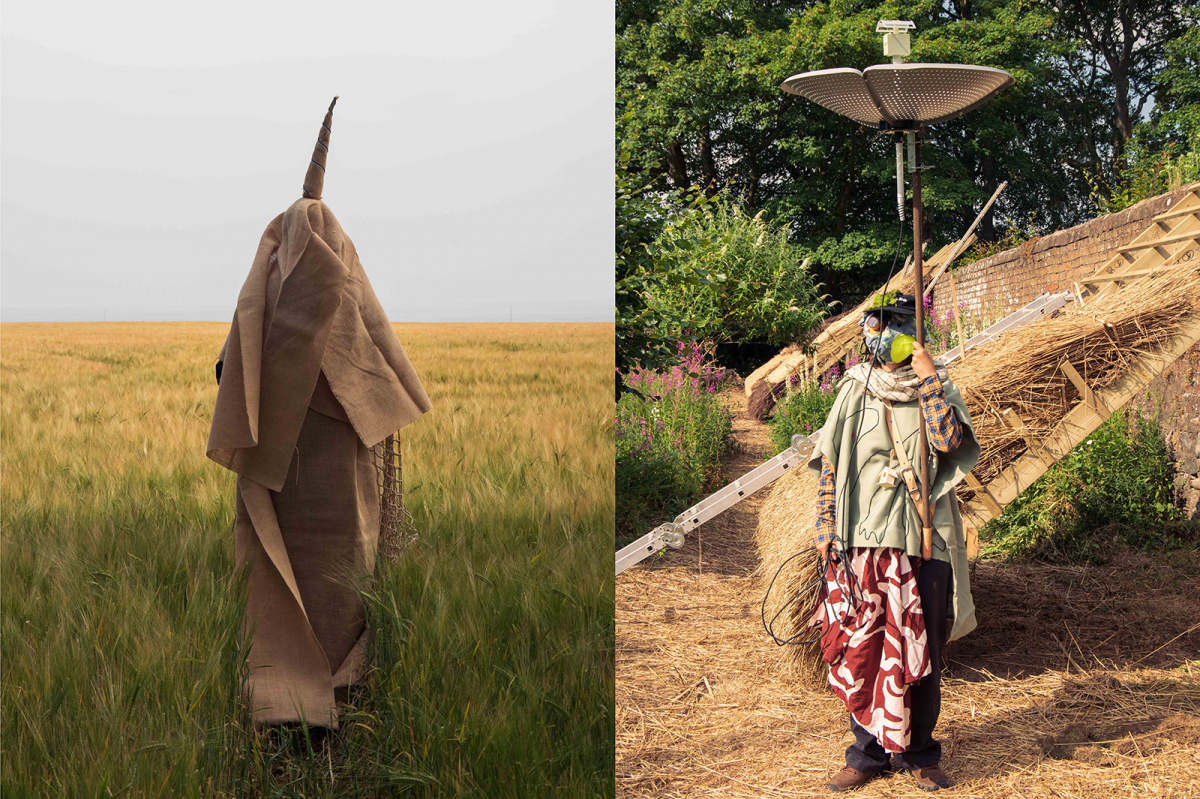
Stone (Butch) Circle, led by Marf Summers, travelled in a different direction, reaching backwards into prehistory while asking urgent questions about contemporary identity. Here, craft became a form of resistance to the speed and abstraction of the attention economy. Leatherworking, folk costume, and improvisation provided ways to think through queer embodiment, self-fashioning, tools and time.
The body itself became a measuring device. Humour, camp and performance were not embellishments but methods for opening up more difficult questions about how identities are made and regulated. A nearby site visit to view the Pictish stones housed by Historic Environment Scotland in St Vigeans illustrated spiritual connections between human and non-human life, with the village itself formerly a place of religious importance.
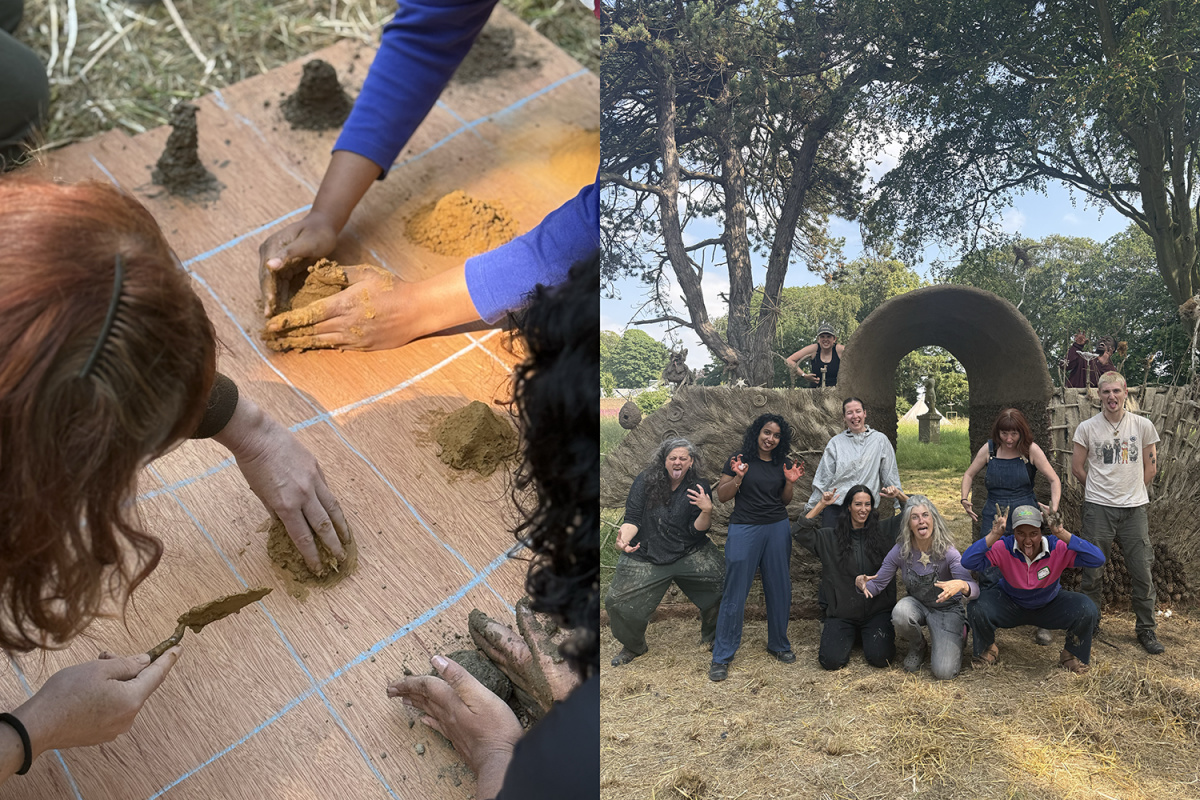
For Becky Little, The Continuum of Earth began literally beneath participants' feet. Working directly with a variety of soils found across Scotland, fibres and simple tools, the workshop explored earth as a living material rather than an inert construction product. Participants moved from testing soils through water-content mixing, forming and building, encountering mudwall, adobe, daub, light earth and natural finishes along the way. The emphasis was not on mastering a technique but on developing a relationship with material. Knowledge emerged through touch, repetition and attention.
‘Mud!’ was a recurring rallying cry, and the participants in this group constructed a beautiful triumphal arch aligned towards a nearby statue nestled within the long grass. Becky also shared her own relationship and decades-long history with the materials she knows so well, in an inspiring autobiographical talk held on the Tuesday afternoon.
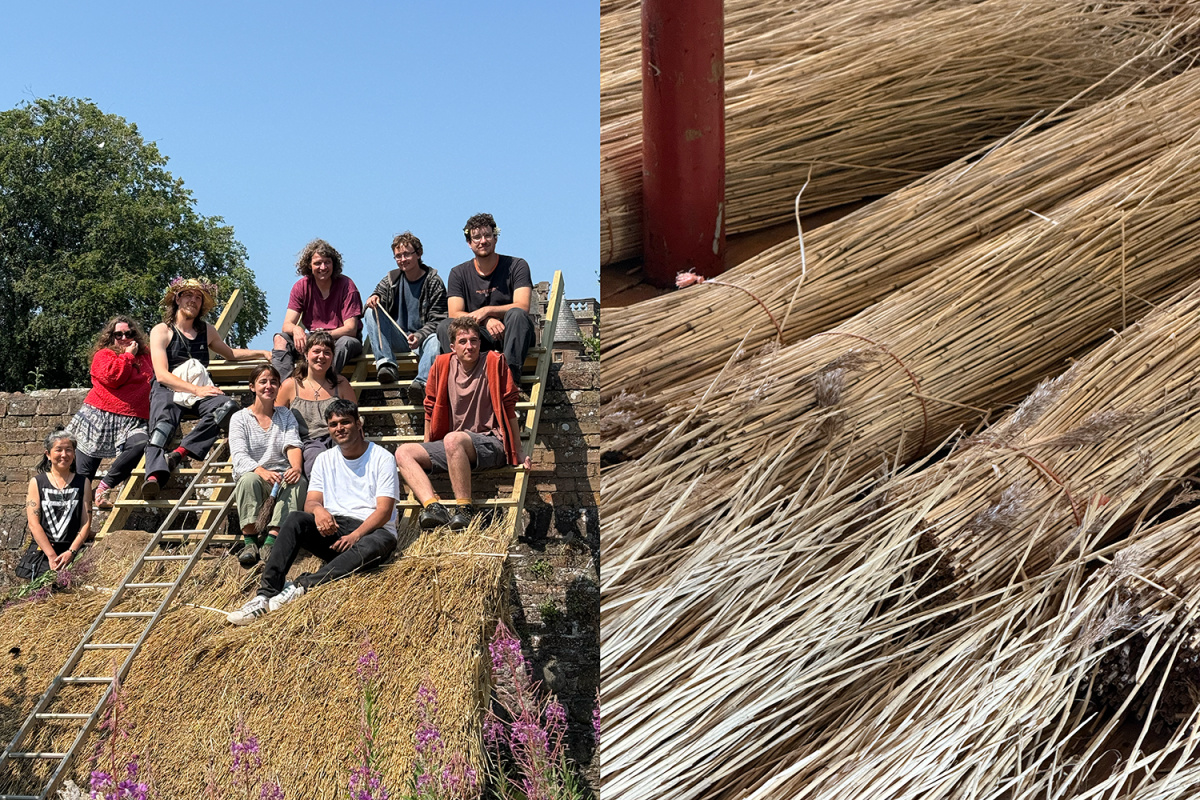
Lastly, Thatch and Scale, led by Akiko Kobayashi with Ben Williams, collapsed the distance between body, material and construction. Thatching became an entry point into questions of scale and embodied knowledge, moving between the sheltering roof, the human body and the tension of the hand. Heather, long straw, and reed were combined with turf underlay across three different structures pitched against the garden wall. Lathing, knotting, movement and butoh (an avant-garde Japanese dance) connected construction techniques with gross and fine motor skills. The result was an understanding of craft not simply as a technical discipline, but as a bodily form of intelligence, sequencing, and assembly.
Under a clear blue sky and warmer air, a site visit was undertaken to where the reeds had been sourced. The River Tay Reedbeds, by Errol, are the largest continuous reedbeds in the UK, first initiated by monks in the 13th Century, and now stretching for 11 miles along the north bank of the river. A truly beautiful place where the reeds can subsume you in height, populated by Bearded Tits, March Harriers, and seals resting on the tidal mudflats.
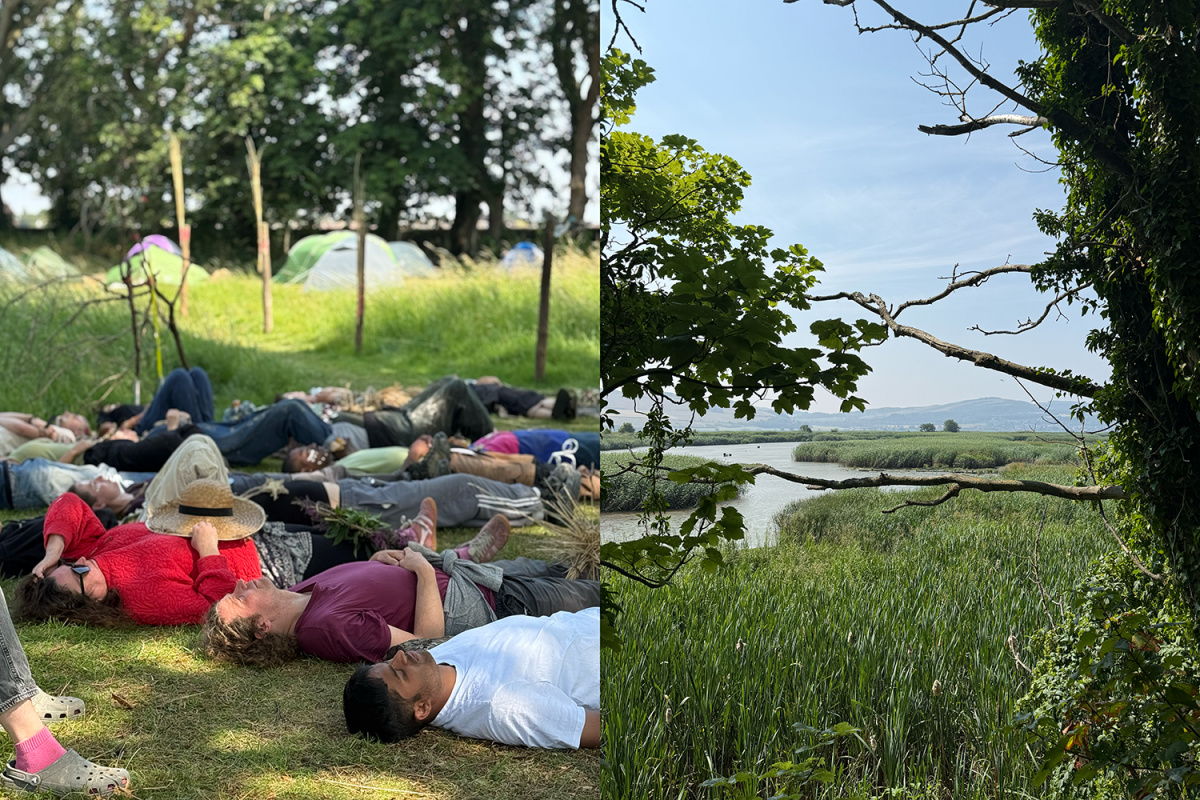
Together, the projects demonstrated the unusual breadth of Earth Station. Yet beneath their differences was a common conviction: that architecture can be understood through relationships as well as objects.
This is perhaps Earth Station's most compelling proposition. At a time when architectural education is increasingly pressured by economic, technological and environmental demands, the summer school offered a deliberately slower model. Its guiding principles — learning with rather than being taught to; learning through doing; learning in layers; treading lightly and kindly; and proactively removing barriers to participation — are deceptively radical.
As the realities of the climate crisis loom ever larger and closer, where the tendency towards 'solutionism' is understandable and strong - Earth Station hoped to be climate aware but also to create space for a deeper climate literacy; whether by tuning into and decoding weather satellites passing overhead, or through a direct connection with our feet literally in the earth, our hope was to create a space for the types of deep discussions that architects will increasingly have to engage with as we consider how we live together on this planet.
The name Earth Station is therefore apt. It describes both a place of connection and a point of departure. For a few days in Arbroath, architecture became less a profession concerned with producing objects and more a shared practice of sensing, making, maintaining and imagining.
****
Thank you to everyone who joined us for Earth Station: Summer Assembly.
Thanks go to Hospitalfield and cafe kitchen for their warm, generous and convivial hosting.
Thank you, too, to Creative Scotland for their Multi-Year Funding support, and to the Royal Incorporation of Architects in Scotland, Edinburgh Architectural Association, SEDA, and V&A Dundee for their support of a number of participant places.
Follow the Architecture Fringe on Instragram | LinkedIn